| Posted June 24, 2024

UBi Dialogue Forum 2024: Biodiversity as an Economic Driver

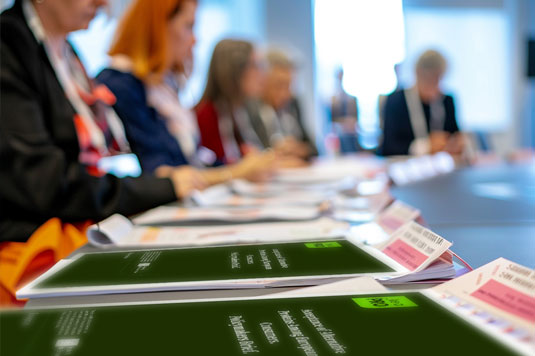
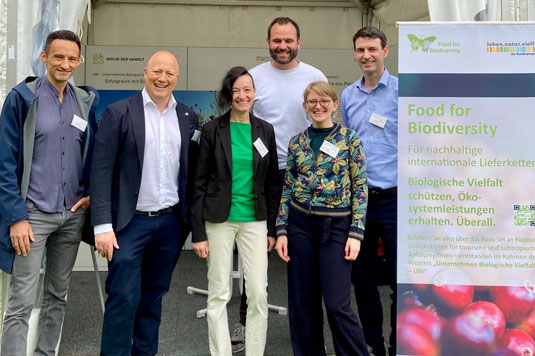
Think about a precise clockwork mechanism: every cog and every gear working in harmony to measure time. Remove a small cog, and the clock stops. The economy and nature share a similar relationship. This year’s UBi Dialogue Forum highlighted this interconnection, bringing together over 300 participants in Berlin, Germany to discuss how the economy can protect biodiversity and why this makes sense both ecologically and economically. Dr. Jan-Niclas Gesenhues, Parliamentary State Secretary in the Federal Ministry for the Environment emphasised that “Environmental and nature conservation are the foundation of value creation.” With 70 % of companies relying on at least one […]

| Posted

“Social Sustainability is Central to a Good Life for All”

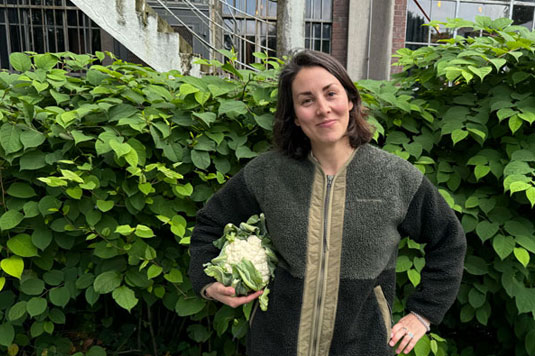
Nils Kreft has joined our CSCP Communication Team with a background in psychology, business and economics. He is passionate about improving social sustainability in our daily lives, particularly in urban contexts. Learn more about his work at the CSCP to advance this and other important sustainability goals. In your work at the CSCP you place importance on recognising all three levels of sustainability (ecological, economical, and social). Do you think they are given due attention in the sustainability agenda? I find that the mainstream conversations about economic sustainability, for example, often lack consideration of the other two aspects. At the CSCP […]

| Posted

The Bergisch City-Triangle: Germany’s First FAB Region in the Making

The CSCP is collaborating on a project to establish the Bergisch city-triangle as Germany’s first FAB Region. This will position the region in the Fab City network as one of more than 50 cities and regions worldwide committed to bringing production back to the local level while strengthening sustainability, circularity, and open-source knowledge sharing. A few months after its launch, the FAB Region Bergisch city-triangle project (FAB Region Bergisches Städtedreieck), a pioneering initiative aimed at contributing to a sustainable and circular economic transformation within the cities of Wuppertal, Remscheid, and Solingen, has reached its first important milestones. The project partners have […]

| Posted June 21, 2024

Want to Cook Like a Winner? – Download our KochCup Cookbook Now!

Few other things have the ability to bring people together and create shared experiences like sports and food do. Our KochCup combines the two to draw attention to the importance of shifting toward healthier and more sustainable diets. The project wants to use the momentum of the European Men’s Football Championship, taking place from 14 June to 14 July 2024, to spread inspiration and ignite action on making healthy and sustainable food the norm. As part of the project, chef trainees across Germany were invited to join a cooking contest and create innovative, healthy, tasty, and sustainable recipes. After months of […]

| Posted

Our ARABICA Project Has Launched: Promoting Sustainable Coffee Value Chains

Brazil is the leading global coffee producer, supplying about one third of the world’s coffee. The coffee industry is a strong pillar of the country’s economy, but comes at the cost of water pollution, habitat destruction, and topsoil erosion – to name a few. Socio-economic issues such as low wages and inequalities affecting coffee farmers only add to the challenge. In our new project, ARABICA, we will focus on addressing these pressing sustainability issues related to coffee production in Brazil. Funded under the European Union AL-INVEST scheme, the project stands for promoting sustainability, equity and transparency in the Brazilian coffee value […]

| Posted June 20, 2024

The Handprint Approach: A More Holistic Take on Sustainability Impact

Unlike the widely known carbon footprint, which measures the negative impact individuals or organisations have on the environment, the handprint assessment follows a more holistic approach. By capturing the amount of savings on greenhouse gas emissions that a product or service can offer, the handprint also takes into account important social and economic dimensions and promotes biodiversity, ecological health, and increased social wellbeing. In 2015, the CSCP, together with the Centre for Sustainability Management of the Leuphana University Lüneburg, the University of Hohenheim, and the Center for Sustainable Leadership of the University of Witten/Herdecke embarked on a research journey on the […]

| Posted June 17, 2024

Increasing the Recyclability and Circularity of Plastic Packaging: Learnings from Best Practices

As multi-layer packaging is designed by binding together different materials, separating the layers for recycling is particularly challenging. Innovations in design and recycling as well as new approaches on a policy and consumer behaviour level could be a way to achieve higher recycling rates and better recycling quality. The report “Guidelines on Increasing the Recyclability and Circularity of Plastic Packaging” shares good practices on how to increase the quality and rate of multi-layer packaging recycling. Currently, the lack of specialised technologies for sorting and recycling multi-layer packaging and concerns over the quality of recycled material contribute to low rates of reuse […]

| Posted June 13, 2024

Tools to Tackle Consumer Food Waste from the European Consumer Food Waste Forum

More than half of all food waste in Europe is caused by households*. This is mainly leftovers or wasted food due to inadequate meal planning or improper storage. In June 2024, Nora Brüggemann and Rosalyn Old from CSCP attended the “Let’s reduce consumer food waste!” conference at the European Commission in Brussels, Belgium, to share insights from our work on food waste and learn what others across Europe have been testing. The event brought together experts and practitioners from across Europe to get to the heart of what really works when it comes to reducing food waste and how we go […]

| Posted June 4, 2024

Supporting Central and Eastern European Countries to Shape Bioeconomy Strategies

Involving all actors through an open and collaborative approach is key in fostering the adoption of bioeconomy strategies on a national level. Our CEE2ACT project tackles knowledge gaps and challenges related to such processes to facilitate better engagement and interconnection among actors across sectors and industries. As part of the project, ten Central and Eastern European (CEE) countries are working toward developing national bioeconomy strategies. In 2023, National Bioeconomy Hubs (NBHs) were launched in all participating countries, Bulgaria, Croatia, Czech Republic, Greece, Hungary, Poland, Romania, Serbia, Slovakia, and Slovenia. In each country, different stakeholders, from ministries to industry leaders, gathered under […]

| Posted May 29, 2024

Meet Us at the World Summit on Circular Economy in Córdoba from 13 to 15 June 2024!

As a system in which materials stay in the loop instead of becoming waste, Circular Economy has the potential to mitigate climate change, reduce pollution, and regenerate nature. For the fourth time, the city of Córdoba in Argentina will bring together actors from the private, public, and academic sector to discuss and chart future action on how to propel a Circular Economy that leads toward more sustainability. Meet us there between 13 and 15 June 2024! The summit will focus on how to enhance and mainstream an economic model that integrates consumption, choice, content, and creator-driven dynamics (4Cs of economy) in […]