| Posted June 1, 2023

How Our SteamBioAfrica Project is Supporting Clean and Secure Energy in Africa

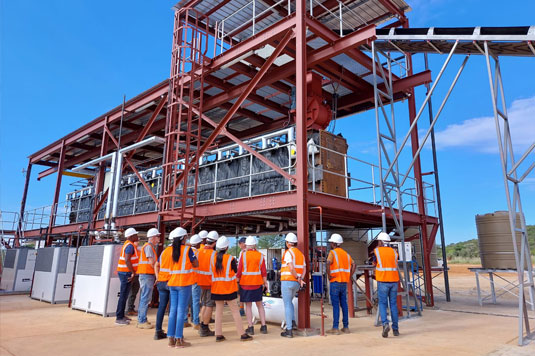
Energy is essential in our everyday lives. However, peaking energy prices have increased levels of energy poverty and insecurity for many communities around the globe. The situation is particularity dire in sub-Saharan Africa. In countries like South Africa, 47% of the households face energy poverty, spending as much as 27% of their income on energy*. In Botswana, up to 75% of the rural population has no access to clean energy for cooking and in Namibia up to 64% of the rural population has no access to electricity**. Through an EU-Africa industry-research partnership, the SteamBioAfrica project is tackling energy poverty and insecurity […]

| Posted May 30, 2023

Supporting Communities to Become Resilient Through Better Crisis Management

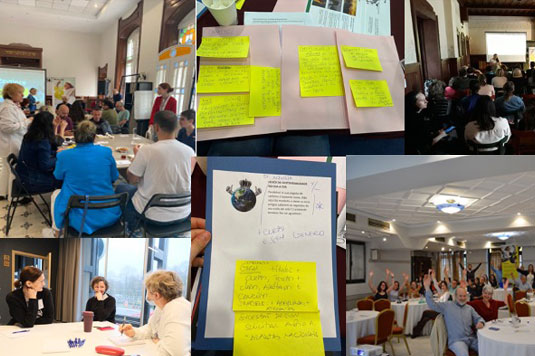
Imagine developing innovative solutions to tackle emergency situations, but when it comes to their implementation a series of practical challenges emerge. How best to account for the uptake and mainstreaming of effective novel technologies by the key actors who will be using them? The PathoCERT project, through its pilot cases and multi-stakeholder engagement processes, tackles this, enabling not only the testing of developed technologies, but also facilitating co-development and feedback mechanisms thanks to its Communities of Practices (CoPs) approach. An efficient response to waterborne pathogen contamination events requires a high-level of coordination among all actors, from those in charge of the […]

| Posted May 24, 2023

Our REIF Project: How Artificial Intelligence Can Save Food

The complexity of the food industry has so far been a hurdle to food waste reduction. On the positive side, due to this complexity, the food industry generates an above-average amount of data that can now be harnessed through disruptive approaches such as Artificial Intelligence (AI). Through the digital marketplace, the REIF project wants to enable a value-added network for the food industry to create synergies and use AI in ways that benefit the industry, the environment, and society alike. The AI services offered on the marketplace, can help actors implement various measures for the respective value-added stages along the entire […]

| Posted May 23, 2023

“Bridging the Sustainability Skills Gap” – Meet Us at the EU Green Week on 8 June 2023 in Brussels!

Digitalisation holds great potential in helping industries to accelerate their decarbonisation journeys. A digital and future-oriented economy can enable Europe to strengthen its industrial position while driving climate neutrality. However, this ambition is strongly linked to the urgency of upskilling and reskilling EU citizens through a mix of policy interventions and industry solutions. The EU Green Week partner event „Green Digital Skills for Sustainable Value Chains: Bridging the Sustainability Skills Gap“, hosted by the Global Enabling Sustainability Initiative (GeSI) will shed light on current European policies and how these convert into industrial actions. The one-day event will address the following questions: […]

| Posted May 11, 2023

Toward a Carbon Neutral Future: Join the Urban-Zero Festival on 13 May 2023 in Duisburg!

How can a zero-waste, carbon-neutral city district look like? How might relevant actors come together and create positive impact? At the Urban Zero-Festival, the municipal enterprise Duisburg will showcase ideas connected to zero-waste and discuss them with the participants. Don’t miss the festival on 13 May 2023! The festival is the starting point of the Urban Zero Initiative, which aims to make Ruhrort the world’s first carbon-neutral neighbourhood by 2029. Through more green spaces, sustainable offers, energy solutions, and mobility concepts, the initiative will benefit the environment and local residents alike. During the festival, the participants can experience, discover, and learn […]

| Posted

Renewable Material of the Year 2023

Global demand for embedded carbon (the carbon in molecules) is expected to increase significantly by 2050. Today, the vast majority of embedded carbon comes from fossil feedstocks, including oil, natural gas and coal. To achieve a fully de-fossilised economy, this demand must be met exclusively by renewable carbon sources, such as biomass. The Renewable Materials Conference, taking place on 23-25 May 2023 in Siegburg/Cologne (Germany), is a platform for showcasing achievements in the field of renewable materials. The conference brings together experts, stakeholders, and industry leaders to discuss latest developments and share their visions and strategies for the future. With a […]

| Posted May 4, 2023

Sustainable Recipes Wanted: Our KochCUP Project Competition Is Launched!

Beyond competition on the field, sports like football are a powerful way to change things for the better on a larger scale. Our KochCup project wants to capitalise on the popularity of the 17th men’s UEFA Football Championship (EURO 2024) to raise awareness and mainstream environmentally-friendly food. How? Through organising a competition of sustainable recipes that will run before and during EURO 2024. The call for entries is open now! The competition, which is supported by the German Federal Ministry for the Environment, Nature Conservation, Nuclear Safety and Consumer Protection (BMUV), is primarily aimed at German trainee chefs. From May to […]

| Posted May 2, 2023

Circular Economy: What’s in It for SMEs? – Listen to Our WertNetzWerke Podcast!

Circular Economy, Artificial Intelligence (AI), and digital tools offer companies vast opportunities to make their value chains more sustainable and resilient for the future. Through webinars, workshops, and trainings, our WertNetzWerke project is supporting small and medium-sized enterprises (SMEs) to make such aspects an integral part of their business. In this new podcast, CSCP Project Manager Thomas Wagner explains how – check it out! In the podcast, listeners will learn why Circular Economy is worthwhile for SMEs, how they can take first steps to integrate circularity in their work, and what are some of the best practices from companies that have […]

| Posted April 20, 2023

Join Our Event at the World Circular Economy Forum on 11 May 2023: Headache Fractions in Mixed Municipal Waste!

Many consumer products pose significant waste management challenges and end up in landfills or incinerators after the use phase. From Circular Economy and waste management perspectives, such products can be considered ‘headaches’ when it comes to recycling and reducing residual municipal waste. At the workshop ‘Headache fractions in mixed municipal waste’, organised as a side event at the World Circular Economy Forum (WCEF), we will discuss the issues at hand and what needs to change to increase recycling and promote circularity. The workshop will draw on learnings from a European Environment Agency (EEA) study, conducted by the European Topic Centre on […]

| Posted April 18, 2023

Don’t Miss Our Event “Circular and Digital: Innovations for Sustainability in Companies and Value Chains” on 4 May 2023!

In the context of rising raw material prices, uncertainties in supply chains, and increasing regulatory pressure, the topic of Circular Economy is becoming the focus of many small and medium-sized enterprises (SMEs). At the event “Circular and Digital: Innovations for Sustainability in Companies and Value Chains”, co-organised by the CSCP and the Center for Innovation and Technology in North Rhein-Westphalia (NRW) – ZENIT,  we will discuss how digitalisation can support the circular transformation in NRW – join us on 4 May 2023! Digitalisation can be a force for good when it comes to achieving greater sustainability. In the context of the […]